CHENEL – Liberation & Reinterpretation
Chenel emerged from a remarkable period of viticultural innovation in South Africa during the mid-20th century. An era in which local breeding programs sought to develop grape varieties adapted to the country’s highly diverse climates, agricultural conditions, and evolving wine industry. Created through deliberate crossing and long-term field selection, Chenel formed part of a broader movement to establish cultivars capable of combining resilience, consistency, and regional adaptability within a uniquely South African context.
This generation of breeding responded not only to viticultural challenges such as disease pressure, climatic variability, and yield stability, but also to the broader economic realities of the time. During decades in which South African wine operated under increasing international isolation and restricted access to export markets due to Apartheid-era sanctions, the industry placed strong emphasis on dependable vineyard material suited to domestic production structures and variable growing environments.
Within this context, Chenel established itself as a technically successful and widely adaptable variety. Like Pinotage, it belongs to the small group of original South African crossings created during this formative period of local viticultural development. If Pinotage became the celebrated voice of South African wine identity, Chenel remained its quieter counterpart — South Africa’s other original, shaped by the same spirit of innovation, adaptation, and local ambition.
Pinotage
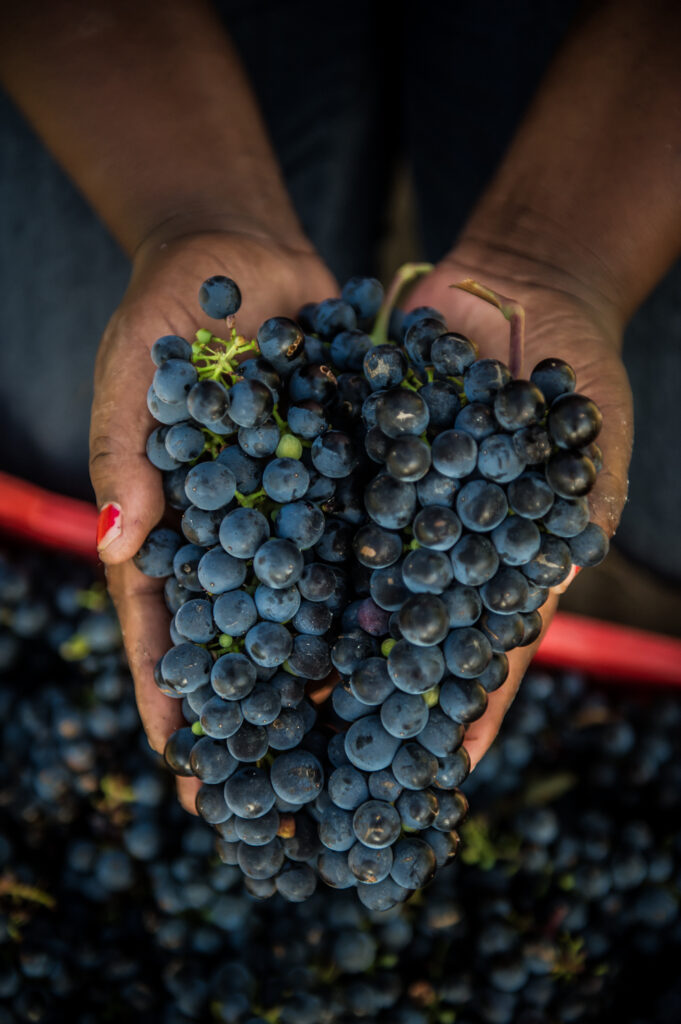
- South Africa’s first red grape, crossed in 1925
- Evolved into a national flagship variety
- Became a symbol of South African wine identity
- Widely studied and commercially established
Chenel
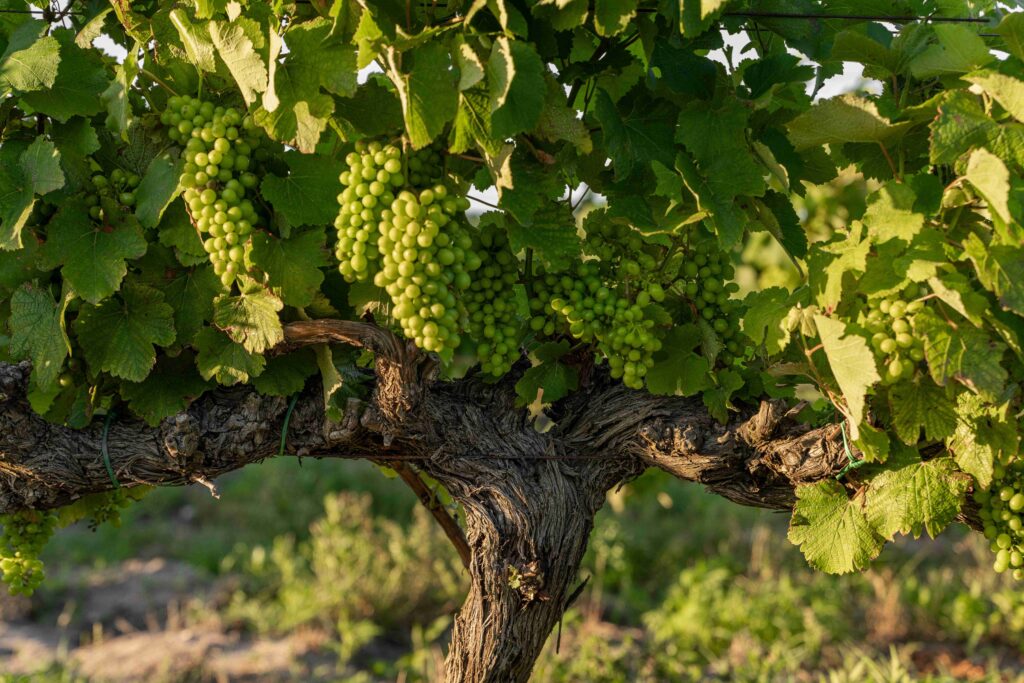
- South Africa’s first white grape, Crossed in 1974
- Remained quietly utilitarian
- Largely absent from fine-wine discourse
- Underrepresented in sensory research
Learn More
Within this shared foundation, the two varieties followed different trajectories in how they were later interpreted and integrated into South African wine culture. Pinotage developed into a defining symbol of national wine identity, gaining visibility, debate, and stylistic evolution as a standalone varietal. It has also remained more present in academic and sensory research, with a comparatively larger body of literature examining its viticultural behaviour, winemaking expressions, and stylistic variability. Chenel, by contrast, has received far less academic attention, remaining largely outside the structured discourse of varietal analysis.
Chenel has instead remained primarily within the sphere of agricultural and production utility. It was widely adopted for its vineyard performance and consistency under variable conditions, particularly in supporting stable yields and reliable fruit delivery. While less present in the discourse of varietal identity, it formed an important part of the practical viticultural framework of its time.
Together, Pinotage and Chenel represent two outcomes of the same breeding philosophy: one that moved into cultural visibility, academic engagement, and stylistic exploration, and another that remained grounded in functional vineyard performance. They are not opposites, but parallel responses to the same historical and viticultural context.
Pinotage and Chenel have a shared foundation. Both are crossings, not classical European varieties. Both are driven by climate adaptation and yield stability. Pinotage became a voice. Chenel remained a tool. But Chenel is not its rival. It is its overlooked counterpart.
1950s — Controlled crossing era
Chenel originates from controlled breeding work under Prof. C.J. Orffer, where Steen × St Émilion was selected within South Africa’s mid-20th-century viticultural breeding programmes focused on climate adaptation and production stability.
Learn More
The work was conducted within Stellenbosch-based agricultural research structures, forming part of broader national efforts to develop cultivars suited to diverse climatic zones, including inland heat regions and variable rainfall systems. The objective was functional resilience rather than stylistic differentiation.
1960s — Field evaluation phase
Field evaluation focused on disease resistance, yield stability, and consistent vineyard performance under variable South African growing conditions.
Learn More
Multi-season trials assessed performance across differing humidity levels, rainfall variability, and irrigation regimes. Particular attention was given to rot pressure and late-season climatic stress, which were critical constraints in production vineyards of the period.
K1 designation
The selected breeding line was formally designated K1 (Kruising 1), marking its identity within the structured breeding programme. It was later renamed Chenel, derived from Chenin Blanc (Steen) and Elsenburg, reflecting its parentage and institutional origin.
Learn More
The K1 designation followed standard South African breeding protocols for early-generation crosses, where selections were numerically coded prior to formal naming. The later name “Chenel” combines “Chenin Blanc” (locally known as Steen) with “Elsenburg”, referencing the agricultural research institution associated with its development and selection history.
Early adoption — interplanting phase
Chenel was widely interplanted with SN (Steen / Chenin Blanc) across South African wine regions through voluntary producer adoption.
Learn More
Adoption followed practical vineyard management patterns common at the time, particularly in Chenin Blanc-dominant regions such as the Breede River Valley, where incremental integration into established blocks was preferred over full replanting.
Adoption drivers
Chenel was adopted for its consistent vineyard performance and improved resilience compared to SN in specific production environments.
Learn More
Key performance traits included reduced Botrytis incidence, improved berry integrity under rainfall stress, stable yields under climatic variability, and improved adaptability across irrigated and semi-arid systems.
Commercial role
Chenel became integrated into bulk wine and brandy production systems supporting high-volume agricultural output.
Learn More
Its use was concentrated in production-oriented regions such as Worcester and surrounding Breede River Valley systems, where stability and volume consistency were primary viticultural requirements.
Agronomic profile
Chenel became integrated into bulk wine and brandy production systems supporting high-volume agricultural output.
Learn More
- Vigorous canopy development requiring management in fertile soils
- Ripening: 21–23 °Brix
- Yield: 15–30 tons/ha
- Acidity: 6–8 g/l
- Sensory profile generally perceived as neutral-to-subtle in comparative evaluations
Industry perception
Chenel was primarily regarded as a structurally reliable blending component rather than a distinct varietal expression.
Learn More
Viticultural literature and producer practice positioned it within production systems prioritising consistency and volume stability over varietal identity or sensory differentiation.
Peak scale (mid-1980s)
Chenel reached more than 150 hectares nationally at its peak, with strong concentration in the Worcester region.
Learn More
This represents its highest recorded vineyard footprint in South Africa prior to systemic decline during subsequent industry restructuring phases.
Structural shift (post-1990s)
The reopening of export markets shifted South African wine production toward varieties with stronger international recognition and sensory identity.
Learn More
This transition aligned planting decisions with global market expectations, increasing emphasis on varietal clarity, branding potential, and export competitiveness.
Decline phase
Chenel plantings declined steadily as replanting cycles favoured internationally recognised and more expressive varieties.
Learn More
Simultaneously, improvements in vineyard management, disease control, and canopy practices reduced the relative advantage of inherently resilient but less market-defined cultivars.
Propagation issues
Earlier propagation practices contributed to uneven plant material quality in later plantings.
Learn More
Rapid grafting onto established vineyard blocks, combined with informal nursery material circulation, resulted in variable phytosanitary status across some vineyard sources.
Contemporary status
Chenel now exists in minimal and fragmented plantings within South African viticulture.
Regional Distribution of Chenel Vines in Hectares 2024
Age of Chenel-Vines in Hectares 2024
Chenel – a variety defined by context, not limitation
Chenel established itself as a reliable, high-functioning production variety with strong agronomic performance. Its reputation for a neutral sensory profile positioned it primarily as a structural blending component within a system focused on volume stability and agricultural efficiency.
While it was never developed or positioned as a mass-market flagship, Chenel consistently fulfilled a defined role within South African viticulture. In the mid-1980s, approximately 150 hectares were planted nationally, with a strong concentration in the Worcester region. Over time, plantings declined, reflecting changing system priorities rather than any inherent limitation in the variety itself.
What this trajectory ultimately reflects is not a loss of relevance, but a shift in perception. Chenel’s characteristics were well suited to the requirements of its original context, but its potential for more expressive, site-driven, and quality-focused winemaking was never a central focus of its historical application.
In a different interpretive framework, Chenel is not a variety that “declined in value,” but one whose value was simply never fully explored.
Accumulated Growth Area in Hectares
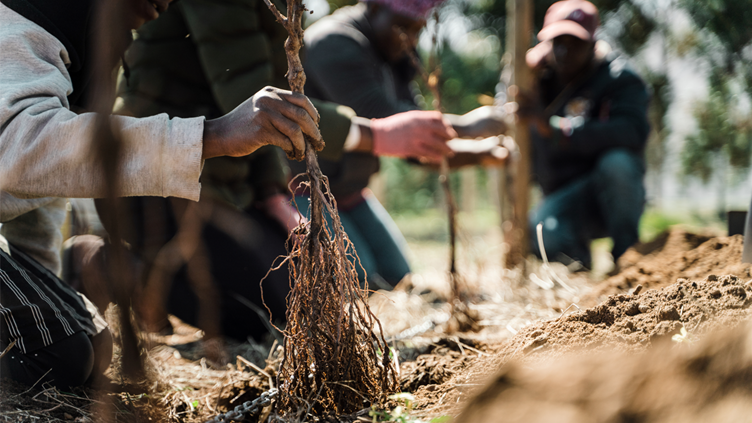
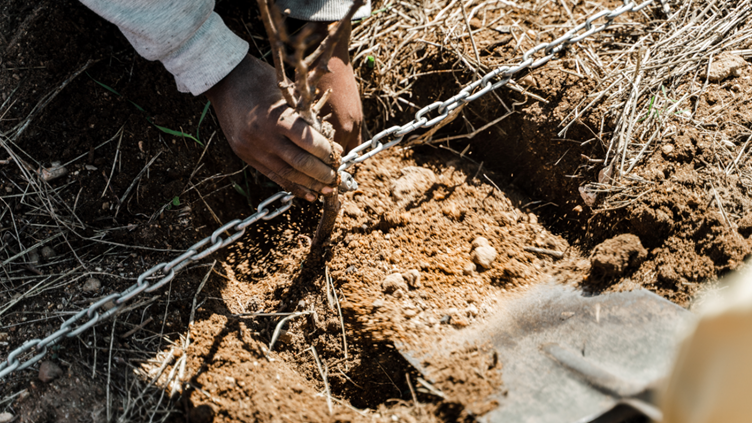
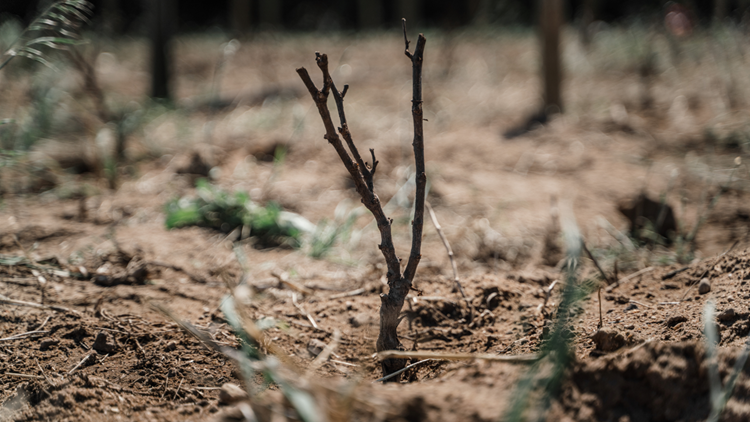
Liberation & Reinterpretation
Chenel’s current re-evaluation is less about rediscovery than it is about liberation from historical positioning. For much of its history, it operated within a system-oriented viticultural framework that prioritised efficiency, stability, and blending functionality over expressive interpretation.
In that context, its characteristics were defined by system requirements rather than the full range of its potential expression.
Liberation from system definition
As viticultural and climatic priorities evolve, Chenel is no longer bound to the role it originally fulfilled. The conditions that once defined its purpose are no longer the only lens through which it can be understood.
This creates space to separate the variety from its historical function and reconsider it through a contemporary viticultural perspective.
Reinterpretation under changing climate
In a context shaped by increasing heat, drought variability, and greater seasonal uncertainty, the focus in viticulture is shifting toward resilience, adaptability, and consistency under stress.
Within this framework, Chenel’s structural neutrality becomes a functional advantage rather than a limitation. It allows direct expression of site, soil, and seasonal conditions without strong varietal distortion, functioning as a high-resolution receiver of environmental variation.
Viticultural advantage
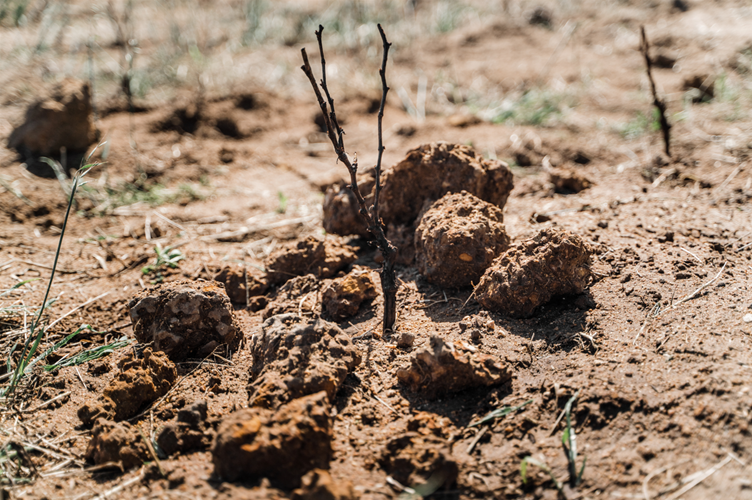
Chenel shows strong alignment with low-intervention and resource-efficient viticultural systems.
Its key strengths include:
- stable performance under climatic variability
- efficient water-use response in stressed environments
- consistent ripening behaviour across diverse conditions
- suitability for reduced-input and regenerative farming approaches
These characteristics position it as a cultivar that performs reliably under conditions where predictability and resource efficiency are increasingly important.
Chenel is not being redefined because it has changed, but because the questions asked of it have changed.
From a system-defined variety to a climate-adaptive, site-responsive cultivar, its relevance shifts toward future-oriented viticulture — where resilience, clarity of place, and minimal intervention are becoming central principles.
Chenel’s renewed relevance lies not in reinvention, but in perspective. A variety developed for agronomic reliability and system stability, it now finds itself aligned with a very different set of priorities; where climate resilience, reduced intervention, and site expression are central.
Its structural neutrality becomes its defining strength: a capacity to transmit soil, climate, and seasonal variation with clarity rather than imprint. In a viticultural world increasingly shaped by heat, drought, and variability, these traits gain new significance.
From a system-defined production tool, Chenel emerges as a climate-adaptive, site-responsive cultivar — not changed in essence, but newly understood in purpose.